Best for: Ecommerce and B2B brands that want to connect AI visibility with revenue.

ConversionBox is an AI Visibility and Conversion Platform designed to help brands become visible before a buyer reaches the website and convert that buyer after arrival.
Its AI Visibility solution follows three connected steps.
First, the ConversionBox AEO/GEO Grader and AI Visibility Audit evaluate how a brand appears across AI engines. The audit checks AEO readiness, GEO visibility, E-E-A-T signals, AI citations, sentiment, competition, crawler access, and actual AI answers.
Second, the ConversionBox Content Assistant turns audit gaps into content briefs, answer-first sections, FAQs, schema recommendations, entity improvements, and authority signals.
Third, ConversionBox Citation Monitoring tracks citations, mentions, missing placements, prompt movement, competitor visibility, and changes after content or schema improvements.
ConversionBox also provides AI Site Search, AI Shopping Assistant, Smart Filters, Product Finder, AI Merchandising, and Search Analytics. This creates a connected journey from AI discovery to product discovery, guided selling, and conversion.
Pros: Complete audit, content, monitoring, and conversion workflow.
Consideration: Best value comes from using the connected platform rather than only its basic visibility features.
Best for: Enterprises that need detailed AI-answer intelligence.
Profound’s Answer Engine Insights tracks visibility scores, share of voice, citations, sentiment, and the sources influencing AI answers. It is suited to organizations where SEO, communications, content, and brand teams need a shared view of AI performance.
Pros: Deep enterprise reporting and source analysis.
Cons: Can be too complex for smaller teams and does not address on-site ecommerce conversion.
3
Semrush AI Visibility Toolkit
Best for: Teams already managing SEO through Semrush.
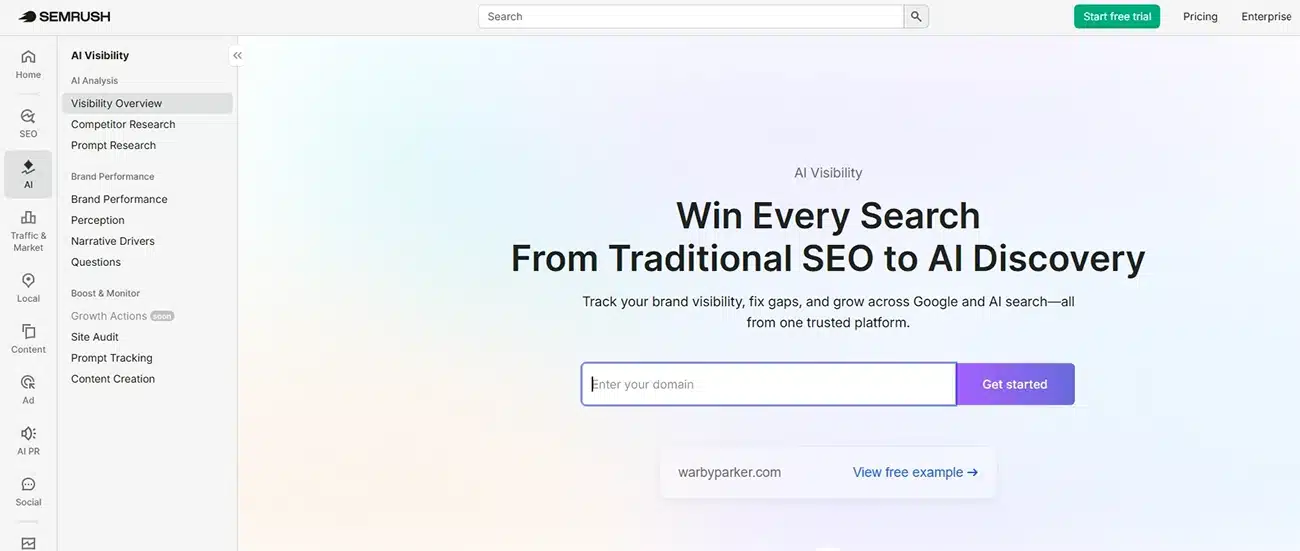
Semrush combines AI visibility reporting with keyword rankings, competitor research, technical audits, and organic-search data. It tracks mentions, competitors, custom prompts, and AI readiness, including checks for blocked AI crawlers.
Pros: Strong connection between SEO and AI visibility.
Cons: Domain and prompt allowances depend on the selected plan.
Best for: Large-scale brand and citation research.
Ahrefs Brand Radar lets marketers investigate brands, products, people, topics, cited pages, and domains across a large database of search-backed prompts. It also supports custom prompt tracking, competitor benchmarking, historical trends, and AI share of voice.
Pros: Broad data coverage and competitive research.
Cons: Strong on analysis, but content creation and implementation require other workflows.
Best for: Marketing teams that want focused AI-search analytics.
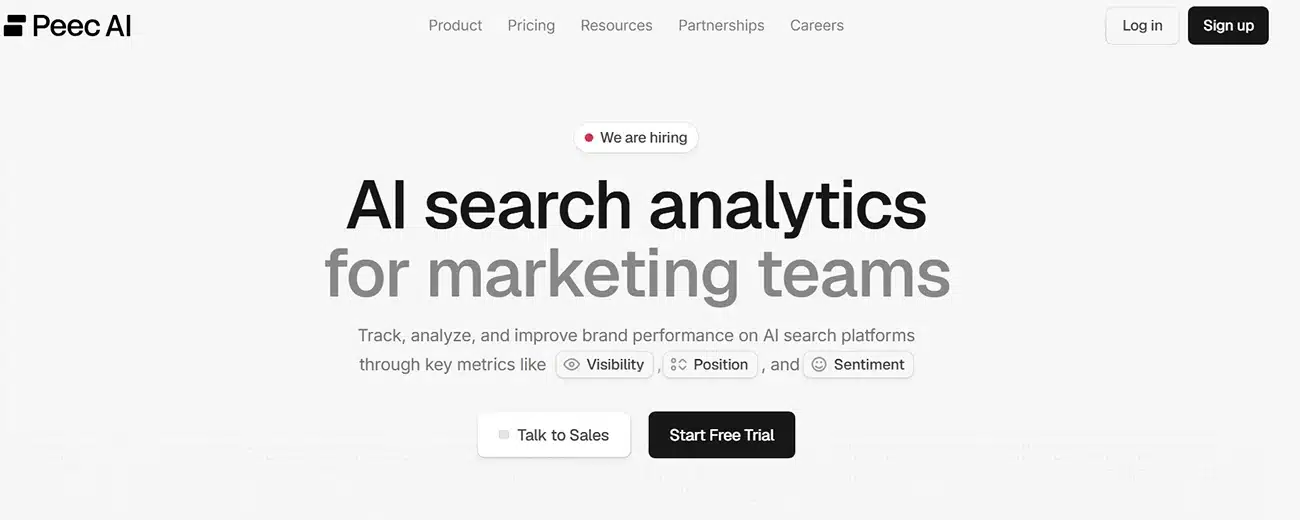
Peec AI tracks brand performance across AI platforms and helps marketers analyze visibility, competitors, prompts, and cited sources. Its focused interface may suit teams that do not need a large traditional SEO platform.
Pros: Clear, dedicated AI visibility reporting.
Cons: Limited support for content execution and on-site conversion.
Best for: Agencies and teams monitoring defined prompt sets.
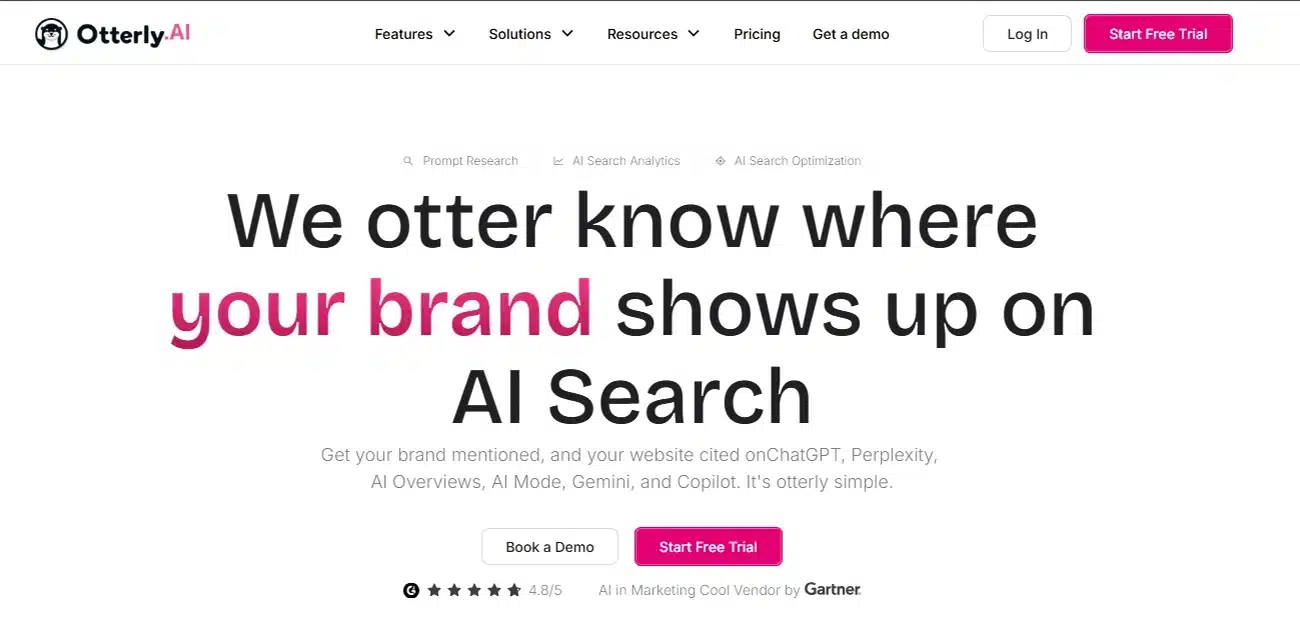
Otterly.AI lets users create libraries of buyer questions and track how brands appear across multiple AI-search platforms. It monitors mentions, citations, source links, competitors, and changes over time.
Pros: Accessible prompt monitoring and agency workflows.
Cons: Large prompt libraries require ongoing organization and maintenance.
Best for: Large, JavaScript-heavy, or technically complex websites.
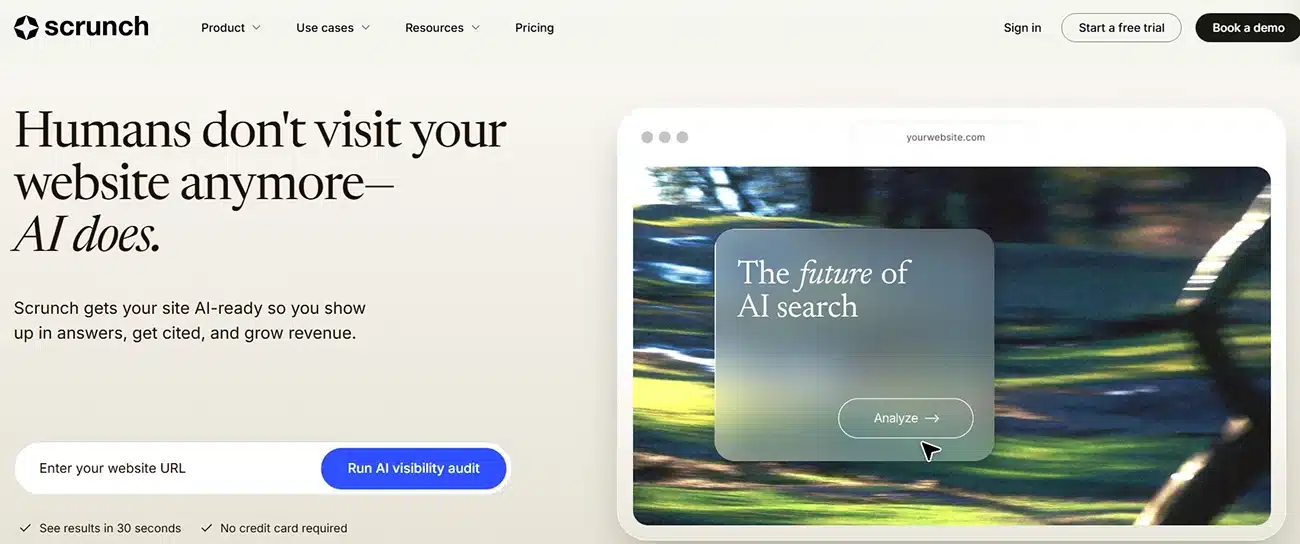
Scrunch combines AI visibility reporting with technical analysis. It monitors brand presence and citations, identifies crawl problems, and offers an Agent Experience Platform that delivers lightweight, machine-readable website content to AI agents.
Pros: Strong technical and AI-agent accessibility features.
Cons: May require more technical involvement than a standard marketing tracker.
Best for: Content teams that want monitoring and production together.
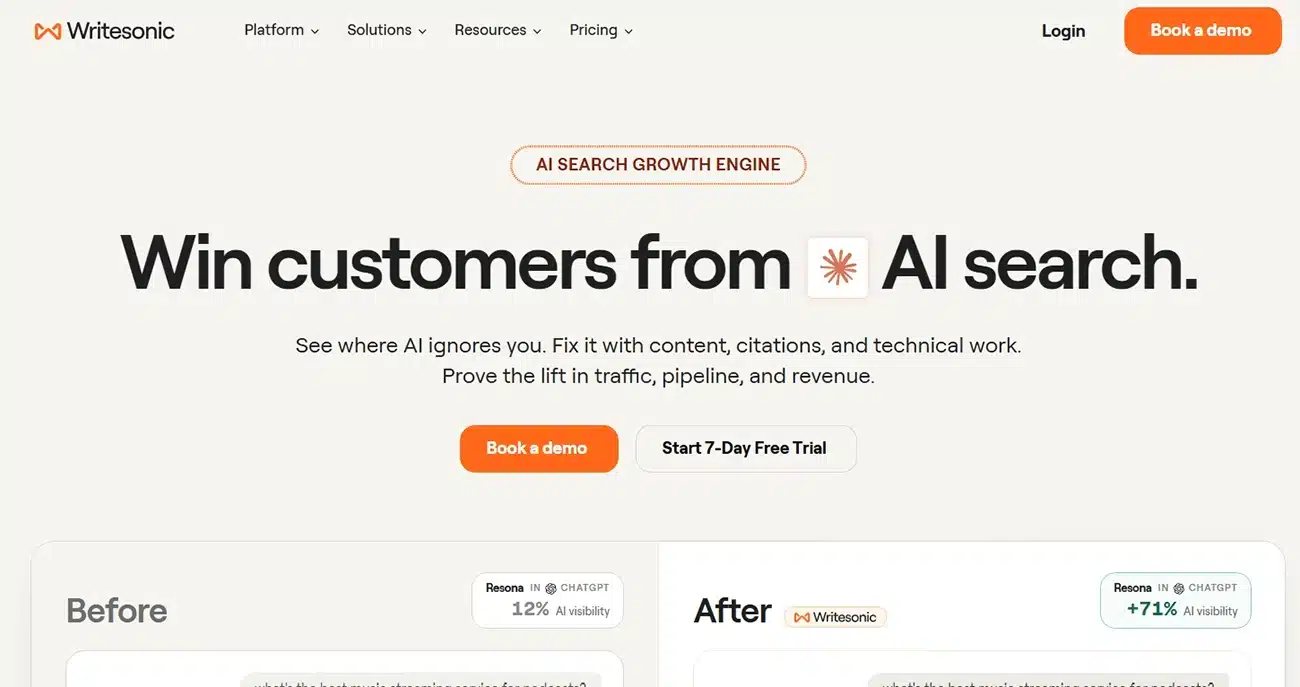
Writesonic tracks visibility, citations, sentiment, competitors, prompts, and share of voice across multiple AI platforms. Its wider content platform can then support the creation and optimization of content based on those findings.
Pros: Combines AI visibility data with content workflows.
Cons: AI-generated content still needs expert review, evidence, and original insights.
Best for: Enterprise teams seeking automated AEO and GEO workflows.
AthenaHQ positions itself as an AEO and GEO platform for monitoring AI visibility and turning insights into actions through content agents, citation analysis, competitive intelligence, and automated workflows.
Pros: Broad automation and enterprise workflow capabilities.
Cons: Its scope may be excessive for teams that only need visibility monitoring.
Best for: Teams that want topic, source, and location-level AEO analysis.
Searchable monitors visibility, mentions, citations, sentiment, sources, topics, query fan-out, and location performance across AI platforms. It also provides workflows for competitor research and AEO planning.
Pros: Detailed topic and source intelligence.
Cons: On-site search, guided selling, and merchandising require separate platforms.