
The “We” Test: How Brands Find the One Ideal Customer Archetype That Drives Growth (Growth Files Ep. 13)
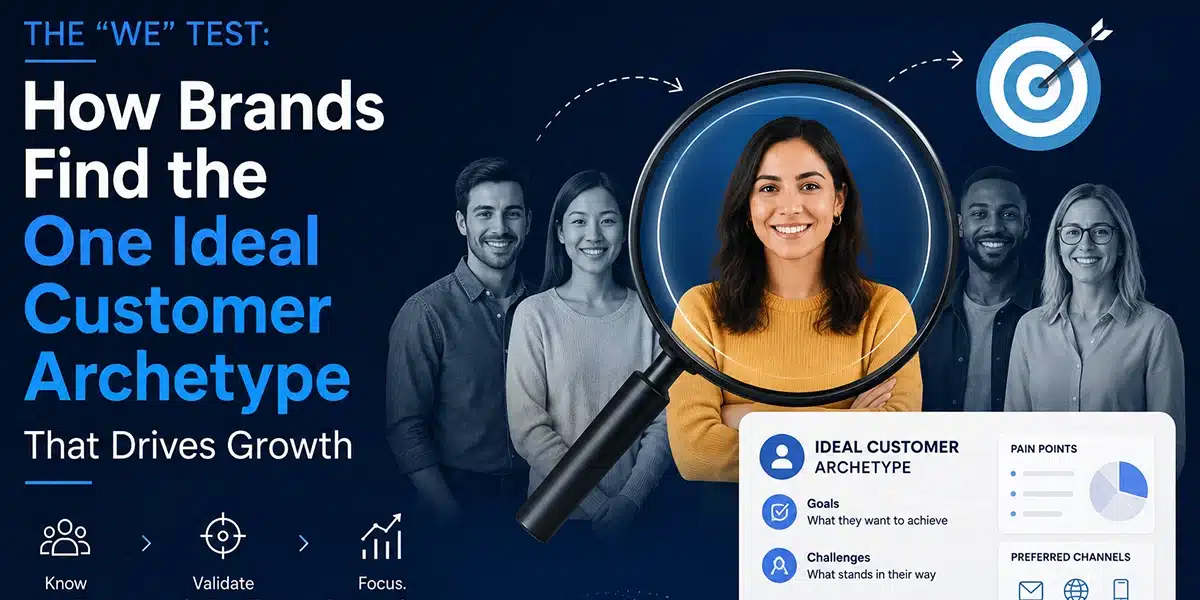
Open your website. Read the first word on the page.
If it is your company name or the word “we,” your customer is missing from your own brand story. Deb Gabor makes this point twice in one conversation, near the start and again as her closing advice, landing both times on the same verdict: you are doing it wrong.
In Episode 13 of Growth Files, Sathish speaks with Deb Gabor, a brand strategist with close to three decades behind her, about the single archetypal customer that makes a brand coherent, the pyramid that predicts how fast you get copied, and why AI tools are flattening entire categories into a sea of sameness.
Episode TL;DR
- •The best brands do four things: aim at one archetypal customer, become part of that person’s self-image, stand alone in their category, and talk about the customer.
- •Your ideal customer is one person. Most companies work from five or seven profiles.
- •The brand values pyramid runs functional, then emotional, then self-expressive. The top tier is the only one that resists imitation.
- •Tesla spends zero dollars on advertising. Owners and their networks built the brand.
- •Roughly 95 percent of buying decisions happen outside the thinking part of the brain.
- •Brand belongs to the CEO. Marketing owns the visible layer only.
- •AI is flattening content into sameness, which makes a real point of view scarce and valuable.
In This Conversation
- Why Brands Keep Making Themselves the Hero
- The Iceberg: Why Strategy Comes Before the Logo
- Brand Early, Often and Always: When Founders Should Start
- The Brand Values Pyramid: Functional, Emotional, Self-Expressive
- The Four Questions That Build a Brand Story
- Chick-fil-A, Amazon, and the Brand Promise as Decision Filter
- Getting an Entire Company Behind One Brand
- One Archetype, Many Buyers: How 3M and Nike Manage It
- Hatch: Closing the Gap Between an Idea and Escape Velocity
- AI and the Sea of Sameness
- Which Brands Thrive Over the Next Five Years
About the Guests

Deb Gabor, Founder and CEO of Sol Marketing and co-founder of Hatch. Deb has led brand strategy engagements since 2003 for household names including Dell, Microsoft and NBCUniversal, alongside dozens of early-stage technology companies. Her Brand Values Pyramid and Ideal Customer Archetype frameworks are used worldwide to align teams and articulate brands.

Sathish Kumar Mariappan, CEO and Co-Founder of CommerceShop and host of Growth Files. Sathish leads a revenue-first eCommerce consultancy for brands scaling from $2M to $25M, focused on conversion optimization, answer engine optimization and B2B manufacturing commerce.
Why Brands Keep Making Themselves the Hero
Sathish: You’ve worked with Microsoft, Dell, a lot of brands over the years. What has changed in branding across that time?
Three decades of platform shifts have left one thing standing.
Deb: “The emotional connections your brand makes with customers are the one thing that endures as things change. Branding is what humanizes that connection. There’s a lot out there trying to automate transactions and relationships. Branding is about humanity.”
Sathish: But a lot of brands talk only about themselves. We do this, we do that. They never make the customer the hero. Why does that keep happening?
Her answer arrives as a diagnosis. Companies do it because nobody has shown them the alternative.
Deb: “I’m on a mission to teach brands what the best ones actually do, and it’s four things.”
1) They aim at a singular ideal archetypal customer. One person the brand is destined to super serve, understood well enough to know what makes them heroic in their own life.
2) They become part of that person’s self-image. The brands people wear on a t-shirt or stick on the back of a car.
3) They stand alone. A category of one, where uniqueness replaces difference.
4) They talk about the customer. The transformation, the win, the person the buyer becomes.
Everything else invites a spec sheet comparison.
Deb: “Brands want to talk about speeds and feeds and bits and bytes, the bells and whistles. Everything can be imitated. When you talk only about yourself, you’re handing customers the field of comparison.”
Which brings her to the four-second diagnostic.
Deb: “If you open your website and the first word is your company name or the word ‘we,’ you’re doing it wrong. It happens because it’s easier than understanding the transformation we create.”
Call it the We test. Four seconds, and it reveals who the page is built around. Feature-led positioning tells a buyer which competitor to line you up against. Transformation-led positioning gives them something available only from you.
The Iceberg: Why Strategy Comes Before the Logo
Sathish: Many people still think branding is the logo and the colors, not a business strategy. Does that change?
Deb splits branding into two categories, and the one that matters is invisible.
Deb: “There’s the kind I do, branding with a capital B, which is about everything you don’t see. Think of an iceberg. The logo, the colors, your ads, that’s the tip. There’s ten times more important material below the surface, and that’s the strategy. Who you’re for. What emotional territory you occupy. That’s the part nobody can imitate.”
She builds identity systems too, and they come last.
Deb: “Companies come to me and say, here’s my logo, here are my colors, and they’ve done none of the strategic work. You pick a name, get your neighbor to sketch a logo, and then it’s a business. That’s the last thing you need to do.”
Sequencing has become expensive to get wrong. When identity work was slow and costly, starting there was merely wasteful. Now that anyone can generate a complete visual system in an afternoon, it produces something indistinguishable from every brand using the same tools.
Deb: “As AI design tools get better, everything looks the same, so visual branding matters more.”
The submerged layer is the part competitors see least and copy slowest. It also tells the design what to be.
Brand Early, Often and Always: When Founders Should Start
Sathish: For a founder starting out in a garage, thinking about brand and market footprint is a very big topic. Should they start there, or does it come later?
Deb treats brand as an operating system, live from day one.
Deb: “Branding is an always-on activity. A brand is a living, breathing organism. Founders need strategic brand from the start. They need to know who the ideal archetypal customer is, the one most predictive of their success.”
The most common answer she hears is the most expensive one.
Deb: “I talk to a lot of startups who tell me their customer is everybody. Do you know how much waste is involved in marketing to everybody?”
Early definitions are provisional by design.
Deb: “Brand early, often and always. At the beginning it’s just hypotheses. Then as you serve early customers, the picture gets deeper and more dialed in. When I’ve seen early-stage companies fall flat, it’s when they haven’t treated brand strategy as essential.”
Deb: “I’ve heard many times that when you aim at nothing, you hit it with amazing accuracy 100 percent of the time.”
What separates the companies that sharpen their aim from the ones that drift is whether anyone revisits the hypothesis once real customers show up. The work costs little, and Deb points out it can be done in a room with your own leadership team.
Watch the Full Conversation on YouTube
Deb walks through the pyramid, the archetype exercise, and the four questions she puts to every client.
Watch on YouTube →
The Brand Values Pyramid: Functional, Emotional, Self-Expressive
Sathish: You have this concept, the brand values pyramid. Can you walk us through it?
This is the core of Deb’s methodology, applied identically to pre-launch startups and household names. The logic comes from Maslow.
Deb: “You satisfy the basic needs at the bottom, food, water, shelter, going to bed not afraid you’ll get eaten by a bear, before you can feel like you belong, and belonging builds the self-esteem that lets you self-actualize.”
Brands work the same way, across three tiers.
| Tier | What it covers | Car example | Shelf life |
|---|---|---|---|
| Functional | What the brand is and does | Wheels, steering, leather seats | The price of entry |
| Emotional | How the features make a buyer feel | Panoramic roof, bigger engine | Short. Today’s option is tomorrow’s standard |
| Self-expressive | What using the brand says about the person | The story a stranger invents about the driver | Long, and effectively unimitable |
Functional benefits are the qualifiers. Wheels. A steering wheel. Leather seats in a luxury SUV. They earn consideration and stop there, which explains the behavior above.
Deb: “You asked earlier why brands talk about themselves. They’re stuck at the bottom, like a car brand saying, we have wheels.”
Emotional benefits feel like differentiation until a competitor makes them standard.
Deb: “The first car I bought with my own money, I paid $300 extra for that little mirror on the back of the visor. Market on the itties, reliability, availability, scalability, or the ers, smaller, thinner, faster, and you invite imitation.”
Self-expressive benefits are the tier competitors have no way to take, because they live in the buyer’s identity.
Deb: “Where I live there are a lot of Cybertrucks, and I have a very specific feeling about people who drive them. If somebody pulls up next to me at a stop sign in one, I have invented an entire story about who that person is and what they care about.”
Sathish: It connects for me, because my son is five and he loves spotting a Cybertruck. Whenever we’re on the road it’s, hey, Cybertruck. Like they see a rocket.
Deb: “That’s a strong brand. If a five-year-old can create a story where he sees himself, he’s envisioning himself as a Cybertruck driver.”
Then comes the line that belongs in a budget meeting.
Deb: “Tesla spends zero dollars on advertising. That brand grew through word of mouth and third-party validation. It was built basically for free, by owners and their networks.”
Most positioning documents live in the bottom two tiers because those tiers are easy to write, and those are the tiers a competitor neutralizes with a product update. A brand at the top converts its owners into a distribution channel, which is how the advertising line approaches zero.
The Four Questions That Build a Brand Story
Sathish: How do you get to that emotional connection? Is it through storytelling?
Deb separates the trend word from the work underneath it.
Deb: “Everyone says they need to go tell stories. But first you have to figure out what story you’re telling, and your brand is your story. A lot of brands tell stories without ever defining the brand story.”
The reason storytelling works is anatomical.
Deb: “People think the thinking part of the brain, the neocortex, is what’s involved in branding. It isn’t. It’s the part that gives people the feels, the limbic system. People need to feel something to do something, because 98 percent of what your customer’s brain is doing happens outside their awareness. Ninety-five percent of decision-making happens in the heart, in the gut.”
Deb: “A brand is a shortcut for what you want people to feel about you before they ever touch your website.”
Four questions produce that shortcut.
1) Who are you for? This is where the ideal customer archetype comes in, and Deb makes clients literally draw it.
Deb: “Everybody talks about the ICP, and most organizations have five or seven. I’ll tell you this for free: you’re doing it wrong. The ideal customer is one person. If they control a lot of money, draw them on a pile of it. If they’re in growth mode, put them next to a graph going up and to the right.”
2) What does it say about your customer that they use this brand? Smart. Savvy. Somebody with a lot at stake and no time for nonsense.
3) What is the one thing people get from you that they get nowhere else? The question that decides everything, and the one most teams fail.
Deb: “It’s not a feature, it’s a superpower. I can buy shoes at Nordstrom and at Zappos. What does Zappos give me that Nordstrom never can?”
4) How does your customer become the hero? Which requires knowing what a win looks like from their side of the table.
Deb: “A win is often not buying your stuff.”
For a business buyer, the win might be looking like an innovator inside their own company. For someone buying toothpaste, feeling attractive. None of the four questions asks what you sell or why you are better. The uniqueness question is diagnostic: when the honest answer turns out to be a feature, you have good marketing and a product waiting for a brand.
Chick-fil-A, Amazon, and the Brand Promise as Decision Filter
Sathish: Beyond Tesla, which companies do you think are doing this well?
Deb’s examples share a trait that shows up in capital allocation.
Deb: “Chick-fil-A is interesting. Like Tesla, they don’t spend much on advertising because they don’t have to. Their whole brand is baked into their philosophy, which is care for people. I’ve read they invest about what McDonald’s spends on advertising into the employee experience instead. They cracked the code that their employees need to be the best treated in the industry.”
When the promise concerns how people are treated, the frontline becomes the medium, and the advertising budget moves accordingly.
The second example shows a promise setting the boundary of a category.
Deb: “Amazon is a platform for buying and selling everything from A to Z. It’s baked into the logo, that arrow they call the smile goes from A to Z. People scratch their heads at Amazon’s decisions, but the brand promise underpins all of them. If you’re a platform for everything from A to Z, you can’t only sell small things.”
Which is how a bookseller ends up buying an appliance brand and a grocery chain.
Deb: “So when Amazon bought Kenmore from a failing Sears, people didn’t understand. Kenmore is ovens and washing machines. Same with Whole Foods. Imagine a connected refrigerator that notices you’re low on milk and a half gallon shows up at your door.”
Deb: “The brands doing a good job, and I don’t have to love them, I just admire what they do, are the ones with relentless clarity, running the same strategy in every decision at every level.”
Here is the test for your own promise: a real one makes some expensive decisions obvious and rules others out. Run it backwards against your last three major investments and see whether it predicted them.
Listen to the Full Episode on Spotify
The audio version covers Deb’s founder story, the eight-hour brand exercise, and her read on which brands will thrive.
Listen on Spotify →Getting an Entire Company Behind One Brand
Sathish: How do you bring that into the culture, so sales, marketing and operations all align to the brand promise?
Deb starts with an ownership question most organizations answer wrong.
Deb: “Brand emanates top down. Brand does not belong to the marketing department. That’s the first mistake I see. The CEO, the founder, the top dog owns the brand and can’t divorce themselves from it.”
The structural reason matters: marketing controls the visible layer and few of the operational decisions that determine whether a promise survives contact with a customer.
Two mechanisms do the work.
1) Build the brand with every function in the room.
Deb: “When you build a brand through internal and external alignment, everyone owns it, so the process should involve every functional area. You also need an outside-in perspective, because you can’t read the label from inside the jar.”
2) Tie the brand to how people are hired, coached and paid.
Deb: “We don’t just hand over a deck, we do brand indoctrination throughout the organization. We show every person, from the CEO to the person who empties the wastebaskets, how they deliver on the promise. Then we recruit, coach and compensate based on the brand.”
Cross-functional definition gives the brand authors across the business. Compensation turns it from a document into an incentive. The deck merely records the decision.
One Archetype, Many Buyers: How 3M and Nike Manage It
Sathish: Some companies serve an end consumer and a business customer at the same time. How does a brand like that think about one ideal customer?
This is the objection almost every multi-segment business raises. Deb answers it with two companies operating at extreme complexity.
Deb: “Take 3M. Historically 3M has stood for innovation and solving customer problems. Industrial products, Post-it notes, Scotch tape, B2B and consumer customers, retail partners, distributors. Very complex ecosystem, but the brand is the brand is the brand, regardless of who they sell to. I heard once they have more SKUs than any other organization in the world.”
The consumer example is sharper.
Deb: “In the consumer world I think of Nike. They sell to the PGA, to professional golfers, to high school and college athletic directors, and to middle-aged women from Salt Lake City, Utah. But their ideal customer is a 19-year-old elite athlete. Regardless of who buys it, the brand taps the inner athlete in all of us. Just Do It works because it starts an inner dialogue, whether that’s you, me, or some guy wearing his old Nikes to mow the grass.”
The 19-year-old elite athlete has never been Nike’s largest revenue segment. The archetype holds meaning steady while the business sells to golf associations, school districts and weekend runners. Segment messaging happens further down, in campaigns and channels. The promise stays singular, which is what keeps a portfolio meaningful.
Hatch: Closing the Gap Between an Idea and Escape Velocity
Sathish: Tell us about Hatch. Why build a ten-week business building sprint? What’s the need?
Deb’s reasoning starts further back than most business cases.
Deb: “When you build something healthy and sustainable, that contributes to healthier economies, and healthier economies are better for humans.”
The gap she is closing sits between an idea and traction.
Deb: “There’s a piece missing between ‘I have an idea’ and escape velocity: the basic business acumen that gets the napkin sketch built. I started Hatch with Cliff Sharples, an operator and CEO, one of the early inventors in e-commerce. He brings the CEO view, I bring disaster-proofing your brand.”
The sprint moves through mission, vision and values, then strategic branding, then business model rationalization, since a striking number of early-stage companies struggle to explain how they will make money. Go-to-market comes last, and founders leave with a hundred-day plan.
Sathish: What’s the biggest obstacle you see for founders when they arrive?
Her answer is autobiographical, and the most useful thing in this section.
Deb: “I started my company in 2003. I did a lot of the right things through instinct and a lot of the wrong things because I was under-supported. My community was my four-year-old daughter, my best friend who’s a teacher, and friends who worked at other companies.”
Deb: “I didn’t incorporate until 2007. I didn’t know how to hire employees or what the tax requirements were. I wasn’t using bookkeeping software until 2010. I was operating in the dark, and my story isn’t unique. I talk to founders every day with terrific ideas and nobody to ask. I wish I’d had a coach, but I didn’t think to look for one.”
Four years from starting to incorporating. Seven to bookkeeping software. That timeline belongs to a capable operator working without a map, which is the real failure pattern: an order-of-operations problem that looks obvious in hindsight and stays invisible in advance.
AI and the Sea of Sameness
Sathish: AI has made content creation much easier. Is that going to make brands look more alike?
Deb answers as an enthusiastic user of the tools, which makes the critique land harder.
Deb: “This is not a knock on AI. I love AI, I use it gratuitously. I’ve built it into my engagements, I’ll write custom prompts or build you a brand GPT so you don’t produce weak content.”
Then the problem.
Deb: “A lot of people are using AI to create content and it’s completely undifferentiated. It all reads the same. There’s an AI cadence to it. It’s overly formal. It doesn’t have a point of view. Even the vocabulary gives it away. If I see the word ‘signal’ in somebody’s content, I know which tool wrote it.”
The flattening is visual as well as written.
Deb: “One morning recently I was scrolling Instagram with my coffee and saw five flyers for different events, all clearly built with the same AI design tool. Same format, same structure. Am I the only one noticing? My hope is the pendulum swings and people start demanding a point of view. I ignore anything obviously AI created now.”
Sathish: I see the same thing in design and development. When I look at certain websites now I can tell they came out of an AI design tool. Nothing human made.
Deb saw this coming a decade ago, at an expo booth.
Deb: “Back around 2015 I walked an expo floor and saw an early AI company that purported to do branding. I was shocked, and I also thought, this is the next wave, I need to figure out how a computer is going to do the voodoo that I do.”
Her answer is a compressed version of her own process.
Deb: “What came out of that is the eight-hour brand. You spend one eight-hour day on the strategic work and don’t leave the room until the underpinnings are done. Then go use your AI.”
Deb: “I think it’s irresponsible to produce content without a branded point of view that belongs only to you. The companies that succeed in this AI age put a premium on thinking, on feeling, on emotional connections. So stop. Thanks for listening to my TED talk.”
The economics cut against the instinct to publish more. When generating content approaches free, everyone’s volume rises together and volume stops functioning as a position. A recognizable point of view becomes the scarce input. The eight-hour brand resolves it: do the strategic work with humans, then point the tools at a defined position.
Deb: “AI for automation, humanity for the emotional connections. Don’t let those go away.”
Which Brands Thrive Over the Next Five Years
Sathish: Looking ahead five years, which brands thrive and which disappear?
Deb’s optimism has a specific shape, pointing away from the obvious categories.
Deb: “I’ve met with companies that all have one thing in common. They serve people doing things that cannot be disintermediated by AI. One is building a text-first platform for small home contractors to automate the business side of their work. Home building will never go away. People will always have to swing hammers. AI can make it better, safer, faster.”
Deb: “Another serves beauty practitioners, barbers and hairstylists and aestheticians. I love businesses supporting humans doing very human things. Brands that serve humans, humans serving humans, those will do well with the help of AI.”
The second prediction concerns focus.
Deb: “The more generic a brand becomes, the less impact it has. I think we’ll see more specialization and more niche brands, especially with a growing influencer economy. The brands surviving this period are doubling down on human connection.”
The durable opportunity sits with people whose work resists automation. Home building, hair, skin, trades. Specialization follows the same logic, because generic positioning keeps getting cheaper to produce and easier to ignore.
Sathish: One last piece of advice for founders listening. What would it be?
Deb: “If you only do one thing, figure out who your ideal archetypal customer is. Who are you destined to super serve? When I’ve seen organizations scale rapidly and with focus, it’s when they got extremely clear on the one person most predictive of their success, and gave that person a seat at the table in every decision.”
Deb: “Then go open your website. If the first word is ‘we’ or your company name, you’re doing it wrong. Your customer has to be the hero.”
What Brand Leaders Should Do Now (Checklist)
Commit to the first three this week. They cost an afternoon and tell you how much of the rest you need.
- ✓Run the We test: read the first word on your homepage and write it down honestly
- ✓Count how many ideal customer profiles your team currently works from
- ✓Sort your top ten marketing claims into functional, emotional and self-expressive tiers
- ✓Draw your one archetypal customer as a person, with what they carry and what they chase
- ✓Answer what buyers get from you that they get nowhere else, and reject any answer that is a feature
- ✓Define a customer win that has nothing to do with buying from you
- ✓Move brand ownership to the CEO in writing, with every function represented in the work
- ✓Test your promise against your last three major investments and see whether it predicted them
- ✓Brief any AI tool with your brand story before it generates a word of copy or a pixel of design
Brand Strategy FAQs
What is the “We” test in branding?
A four-second diagnostic: open your homepage and read the first word. When it is your company name or the word “we,” the page is organized around the seller, which means the customer is missing from the brand story.
What is an ideal customer archetype?
The single archetypal person a brand is built to super serve, described as a human being with motivations and a life. Where an ICP framework produces five to seven firmographic profiles, the archetype is one person, giving an organization a single aiming point.
Who should own brand inside a company?
The CEO or founder. Marketing controls the visible layer and few of the operational decisions that determine whether a promise holds. Brand definition should involve every function.
Ready to Find Out Who Your Brand Is Actually For?
Most commerce brands have an aim problem: too many customer profiles, positioning built on features a competitor can match, and a homepage that opens by talking about itself. CommerceShop works on the gap between what a brand means and what its storefront actually says, from positioning and conversion through to answer engine and generative engine visibility.
Book a Call With CommerceShop →Never Miss an Episode of Growth Files
Growth Files is the CommerceShop podcast on commerce technology and AI, featuring operators and advisors who have shipped the thing they are talking about. New episodes on YouTube and Spotify.

