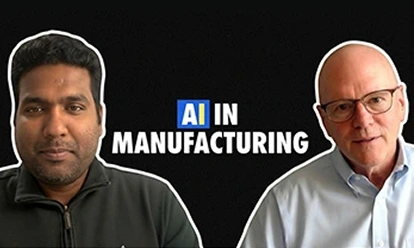
Sathish:
“You have been building digital strategies since the late ’90s. How does AI compare to those shifts?”
Steven:
“I built my first eCommerce site in 1998. This one is different. Social media changed distribution channels. Mobile changed form factors. eCommerce changed transaction models. AI answer engines change something more fundamental: who decides what buyers see first. In traditional search, you could optimize your way to page one. With AI answer engines, the platform synthesizes information and decides which brands get cited, which get ignored, and which get recommended.”
Sathish:
“What problem do these engines actually solve for B2B buyers?”
Steven:
“Speed. Our data shows these engines get buyers about 60 percent of the way to a purchase decision before they ever talk to a human. They are not making the final decision. But they are determining who makes the shortlist. The millennials are already the majority of people making purchase decisions. Gen Z went through university not knowing how to do anything without these tools. Manufacturers have to figure out how to keep up.”
Sathish:
“Walk us through how you tested AI perception of Schneider Electric’s products.”
Steven:
“We took our top 12 product families and built roughly 650 prompts that mirror real customer questions across the entire buyer journey. We ran every prompt through ChatGPT, Perplexity, Google’s AI Overviews, and Bing Chat. We tracked how often we were cited versus competitors, where citations came from, and whether we were recommended or just mentioned. We found product families where we thought we had a strong position, but AI engines consistently cited competitors first. Sometimes our messaging did not match how customers asked questions. Sometimes competitors had better-structured content. And critically, about 80 percent of citations came from sources outside our control. Distributor sites, forums, YouTube videos, and third-party spec databases.”
Sathish:
“Does AI prefer content written by humans over AI-generated content?”
Steven:
“Yes, and it is somewhat ironic. The answer engines consistently favor content clearly written by humans who understand the subject matter. Auto-generated product descriptions tend to be feature lists without explanation. Engines can parse them, but they do not cite them as frequently as content that actually answers questions. FAQs are very popular places the answer engines love to go to. Not generic ones like ‘What is a circuit breaker?’ but specific ones like ‘What circuit breaker rating do I need for a 200-amp service panel?’ Comparison content, application guides, troubleshooting content. All perform well because they match how customers actually ask questions.”
Steven:
“The third-party sources that matter most are distributor websites, industry forums, review sites, YouTube, and technical documentation sites. We have found cases where distributors had old product literature on their sites, and engines cited that instead of our current specs. Remember, all the answer engines go to different places. ChatGPT likes Reddit and Wikipedia. Gemini loves YouTube. You need to think about where each engine will go to find your content.”
Steven:
“Overall traffic is softening slightly as answer engines resolve more queries without sending users to websites. But engagement quality is improving. Generic educational content is declining. Deep product pages, technical specs, and distributor locators are growing. Stop measuring success purely by traffic volume.”
Steven:
“My Nespresso machine broke recently. Instead of calling support, I took a photo of the flashing red light, uploaded it to an answer engine, and fixed it in 10 minutes. That is the future of B2B technical support. Buyers will use AI to troubleshoot first. If your documentation is not structured for AI retrieval, someone else’s YouTube video will be cited instead, even for your own products.”
Steven:
“Different answer engines go to different sources. This is not about creating five times more content. It is about taking your core content and formatting it for different platforms so answer engines can find and cite it wherever they look. We also noticed that content freshness matters. The newer the content, the more likely it is to be picked up.”
Steven:
“AI answer engines expose inconsistency immediately. If marketing describes a product one way, sales describes it differently, and distributors use entirely different terminology, the answer engine gets confused. It may not cite you at all. You have to align messaging across marketing, sales, and distribution.”
Sathish:
“What is the biggest internal hurdle manufacturers face?”
Steven:
“Change management. Fear. People worry AI will replace their jobs. The reality is different. AI replaces inefficiency, not expertise. I work with a salesperson who uses AI to pull information about a customer’s history before meetings. He has more intelligent conversations and the customer’s time is not wasted. I am a strong believer that AI will not replace people, but it will replace people who do not know how to use AI.”
Steven:
“The newest KPI is citations and recommendations from answer engines. Everyone is going to see a decrease in traffic. That is just going to happen. But your website is not less important. It is just being used in different ways. You are going to have to start measuring traffic on third-party sites and figuring out where the answer engines are going.”
Steven:
“Distributors are critical. We will not succeed as a brand unless our distributors succeed in AI. We only sell through distribution. We have to empower them to make sure their sites are readable, and their content is in the right format for answer engines.”
Steven:
“This is the end of the beginning. Nobody has got it right. We are all still trying to figure it out. These LLMs will never be dumber than they are today. Tomorrow, they are going to be smarter. The only constant thing is the constancy of change.”